
Tri Hita Karana is the Balinese philosophy of living in balance across three relationships at once: with the Divine, with fellow human beings, and with nature. The name itself comes from Old Javanese and Sanskrit roots — tri (three), hita (happiness or well-being), karana (cause) — and together they describe “three causes of well-being.” It is not an abstract idea kept inside temple walls. In Bali, it is a daily practice, visible in the small offering placed on a doorstep each morning, in neighbors gathering to repair a village road, and in the rice terraces that have fed this island for centuries.
For those of us on the Bali Spartan Tour team, Tri Hita Karana is not something we studied from a textbook. It is the rhythm our families grew up inside, and it quietly shapes how we drive, how we plan a day, and how we introduce guests to this island. If you are curious about the philosophy behind everyday Balinese life — or simply want to understand why your driver pauses at a certain moment, or why some places ask for extra respect — this guide walks through all three pillars, and what they mean once you are actually here.
The Three Pillars of Tri Hita Karana
Balinese Hinduism teaches that true well-being cannot be reached by chasing just one kind of harmony. A person may be prosperous yet spiritually empty, or devout yet careless toward neighbors and land. Tri Hita Karana holds all three relationships as equally necessary, and each has its own name.
Parhyangan: Harmony with the Divine
Parhyangan refers to the relationship between people and God, and by extension, the unseen world of ancestors and spirits. It is the most visible pillar to visitors, because it shows up everywhere: in the thousands of temples (pura) scattered across every village, in family temple compounds attached to nearly every Balinese home, and in the small, woven-palm offerings called canang sari that appear on sidewalks, dashboards, and shop counters each morning.
These offerings are not decoration. They are a daily act of gratitude and balance, placed with quiet intention before the day’s work begins. Larger ceremonies, temple anniversaries (odalan), and purification rituals follow the same underlying idea on a bigger scale — that the spiritual dimension of life needs regular, tangible attention, not just belief held privately. Guests who want to experience this pillar directly often join a sacred Melukat water purification ceremony, one of the more accessible ways to understand Parhyangan from the inside rather than as an observer. For those drawn to Bali’s most significant temple, a visit with our team to Besakih, the Mother Temple on the slopes of Mount Agung, shows how deeply this relationship with the divine is built into the island’s geography itself.
Pawongan: Harmony Among People
Pawongan is the relationship between people — family, neighbors, community, and, in a broader sense, guests. Balinese village life is organized around the banjar, a hyper-local community unit that handles everything from ceremonies and festivals to conflict resolution and shared labor. The spirit of gotong royong, mutual, unpaid cooperation, is the clearest expression of Pawongan: when a family prepares for a large ceremony, or a road needs clearing after a storm, neighbors show up without being asked twice.
This same value extends outward to how Balinese people treat visitors. The warmth you feel from a driver, a warung owner, or a temple guide is not a performance built for tourism; it comes from a cultural expectation that hospitality is part of maintaining social harmony. It is also why our drivers rarely rush a conversation or a moment, and why the pace of a day with us tends to feel unhurried rather than transactional. You can read more about how this shaped our own founder’s approach to hospitality, after two decades working aboard Holland America Line cruise ships, on our about page.
Palemahan: Harmony with Nature
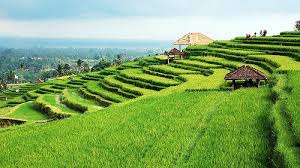
Palemahan is the relationship between people and their natural environment. It is the reason Bali’s landscape looks the way it does, and it is arguably the pillar most responsible for the island’s reputation as one of the most beautiful places on earth. The clearest large-scale example is subak, the centuries-old cooperative irrigation system that channels water through Bali’s rice terraces. Subak is not simply plumbing; it is a democratic, temple-linked water-sharing system in which farmers coordinate planting cycles and water rights through shared rituals and communal decision-making. UNESCO recognized the subak landscape of Bali as a World Heritage Site precisely because it demonstrates Tri Hita Karana in physical form — spiritual, social, and ecological systems working as one.
This same respect for the natural world explains why sacred groves, certain forests, and specific coastlines are treated as protected, not just scenic. Nature is understood as a partner in well-being, not a resource to be used up. Guests who want to feel this pillar slow down and settle into their body often choose our mindful yoga and sound healing experience in Ubud, set among the rice terraces that embody this exact relationship between people and land.
How Tri Hita Karana Shapes the Bali Travel Experience
Once you understand the three pillars, a lot of what happens during a day in Bali starts to make more sense. This philosophy is not reserved for temples and ceremonies; it shapes the pace, etiquette, and quiet decisions that happen around you while you travel.
Why our drivers respect time and ritual
You may notice your driver slow down, pause, or take a slightly different route on certain days. This is often connected to a temple ceremony, a village procession, or an auspicious day on the Balinese calendar. Rather than treating these moments as delays, our team sees them as part of Pawongan and Parhyangan working together, honoring both community events and spiritual timing. It is one reason we build unhurried pacing into every itinerary rather than optimizing purely for speed between stops.
Why respecting sacred spaces matters
Temples and other sacred sites are active places of worship, not museums. Treating them with the same care a Balinese family would is part of honoring Parhyangan and Pawongan at once, respect for the divine, and respect for the community that maintains that space. This matters most at working temples like Besakih, where ceremonies can be happening even during a visit.
Basic temple etiquette to know before you go
- Wear a sarong and sash (selendang) around the waist; most temples provide or rent these at the entrance if you don’t have your own.
- Cover the shoulders and avoid overly revealing clothing.
- Women who are menstruating are traditionally asked not to enter inner temple areas, out of respect for local belief.
- Never step over offerings placed on the ground, and avoid pointing your feet toward shrines or ceremonies.
- Follow your guide’s lead on when to stay quiet, where to stand, and when photography is appropriate.
These small courtesies matter more than any single photograph. If cultural depth is the focus of your trip, our cultural tours collection is built around giving these moments the time and context they deserve, rather than rushing through them.
Frequently Asked Questions
What does Tri Hita Karana mean in English?
Tri Hita Karana roughly translates to “three causes of well-being.” It describes the Balinese belief that true happiness comes from maintaining harmony in three relationships at once: with the Divine, with other people, and with nature.
What are the three pillars of Tri Hita Karana?
The three pillars are Parhyangan (harmony with God and the spiritual world), Pawongan (harmony among people and community), and Palemahan (harmony with nature and the environment). Balinese philosophy holds that neglecting any one pillar disrupts overall well-being.
Is Tri Hita Karana only a religious concept?
It has religious roots in Balinese Hinduism, but it functions as a broader cultural and social philosophy as well. You can see it in local government planning, farming systems like subak, village governance through the banjar, and everyday hospitality, not only inside temples.
How can travelers experience Tri Hita Karana in Bali?
Travelers often encounter it through temple visits, purification ceremonies such as Melukat, walks through subak rice terraces, or simply spending unhurried time with local guides who explain the meaning behind what they’re seeing rather than rushing between photo stops.
What should I wear when visiting a Balinese temple?
A sarong and a sash tied at the waist are the minimum requirement at most temples, with shoulders covered. Many temples rent or lend these at the entrance, though bringing your own is a respectful gesture and often more comfortable.
Why do Balinese people place small offerings everywhere?
These are canang sari, daily offerings that express gratitude and maintain spiritual balance as part of Parhyangan. They are placed each morning at homes, shops, and shrines as a small, consistent act of devotion rather than a one-time ceremony.
Understanding Tri Hita Karana changes the way a trip to Bali feels, less like sightseeing, more like being welcomed into a way of life that has held together for centuries. If you would like a driver and itinerary built around this same unhurried, respectful pace, our team is ready to help you plan it. Message us on WhatsApp to plan your Tri Hita Karana-inspired journey. You can also explore more stories like this in our Bali Wellness & Culture category.